


It's all about the lord of the skies....
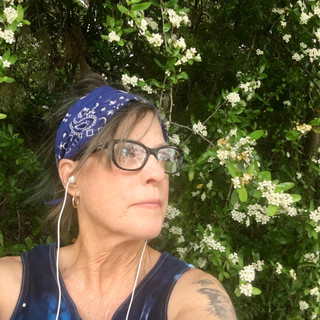

Ever so often, the tv gods deliver something extraordinary. One of my favorite characters in Narcos and Narcos: Mexico is Amado Carrillo Fuentes played by José María Yázpik. His gorgeous good looks certainly don't offend the eye, but dang, his acting chops bring the characterization on home like a smooth landing in challenging conditions. Every time.
I've binge-watched each and every Narcos episode and finished up Narcos: Mexico last night like it was a sack of crack. There are so many good characters in the series, but Yázpik's portrayal of El Señor de los Cielos delivers an aftershock that lingers long after like a wild dream from the night before.

How many scenes did the camera stop to catch our lord of the skies gazing into the horizon? What was he thinking about? This time? What was going to happen next? Let me stop and comment how powerful a move this is, to suspend time into an instant while continuing to
expedite the action of the story. Not just anybody can pull this off. Kind of like the Kuleshov effect when the actor was portrayed expressing hunger, grief, desire, yet his face never changed from one shot to the next. Yázpik 'gets' the action on a sort of spiritual sense, becomes immersed into it and then reacts with his own emotions. Kind of mesmerizing to watch. So much so, I was inspired to find one of these so many instances on Mr. Yázpik's Instagram page and comment, "qué sigue un millón de veces ... cada una mejor que la anterior ..."

Our hero's love interest, Marta, the Cuban singer (Yessica Borroto Perryman) is paired well with Yázpik's Amado. We've all seen one too many agency put-together projects in which the romantic leads have zero or less chemistry. It's almost too painful to sit and watch. Personally, I'm from the little bitty school that opts for no love scene rather than a bad one. That was me up in the balcony hollering out, "mush," when the cowboy kissed the girl. But, Ms. Perryman pulls it off and holds her own, an independent in a place and time when it's a dangerous thing for a woman.

So, all that being said, I cared a lot about Amado, the character. The real guy wasn't quite as endearing as Yázpik's Amado, but the acting asks us to leave reality behind. I found myself forgetting I was watching a production and believing in the person. And isn't that how it's supposed to be?

The Narcos and Narcos: Mexico people really did their job casting, writing, filming, editing a complicated and hypnotic saga. I'm a little bit sad Narcos: Mexico is over and reportedly the last episode of the series. However, there was a little Chapo hint to the contrary when Uncle Don Neto tells Chapo he needs to go ahead and get out of prison. But, until that time, I am going back through actor emphasis on actor José María Yázpik's IMDB file to catch up on all of his other work. I'm going to dive right in and find out....what is going to happen next?

The account of the capture wasn't in the papers But you know they hanged ol' Smack right then instead of later You know, the people were quite pleased 'Cause the outlaw had been seized And on the whole, it was a very good year for the undertaker....


I find understanding rules and chance in online games easier to approach when there is a familiar situation to start from. A memorable result can distract attention from the rules that produced it. That practical perspective helps me frame online gaming literacy as a theme for Viva 88. I can imagine different responses depending on the situation, which makes the question more interesting. Which questions help a newcomer understand a game's mechanics before drawing conclusions?
A discussion of thinking about how spaces and furniture are used seems more useful when it connects an idea with something easy to picture. A room works differently when its layout reflects the activities people actually do there. It is the kind of question I would keep in mind when thinking about Phongcachhiendai and everyday interior design. I can imagine different responses depending on the situation, which makes the question more interesting. What would you observe before deciding which part of a space to change?
Thinking about reading health information with clearer questions, I find the smaller practical questions more interesting than a quick conclusion. An explanation is easier to assess when it separates what is known from what still needs investigation. It is the kind of question I would keep in mind when thinking about Varikozven and health information literacy. It leaves me curious about the steps between understanding an idea and putting it into practice. What would help a reader recognise the limits of a general health statement?
I keep coming back to the everyday side of following curiosity through everyday information, where a simple detail can lead to a wider question. A clear question can turn a casual interest into something easier to explore. That practical perspective helps me frame Sesenv learning ideas as a theme for Sesenv. I would rather explore one useful example carefully than pretend that the whole subject is already clear. How do you decide which detail deserves a closer look before moving on?
When it comes to learning through hands-on creative projects, one clear example can stay with me longer than a long list of general points. Handling a material directly can suggest ideas that are hard to discover from a picture alone. With Jamesworkshop in mind, creative craft projects feels like a topic worth exploring one question at a time. I would be interested in an example that shows how the idea works in an ordinary situation. What small experiment would you try before planning a finished piece?